I’m Resilient, but I Can Be Broken
Our world was turned upside down and our country was sent into a tailspin in March from COVID-19. Our lives have all been impacted. Our minds are in overdrive.
I’ve read in article after article through the pandemic that military families are best prepared for these types of times because we are resilient. There is truth in that statement. Military families are very resilient. Military families are also comprised of humans not superheroes.
Yes, we can totally appear to be heroic in our own right.
- Military men and women saving others in times of war.
- Military men and women taking on overseas deployments time and time again.
- Spouses dealing with the death of parents alone while their spouse is deployed.
- Spouses evacuating from a hurricane solo with three kids.
- Spouses giving birth solo.
Heroic, of course, but let me reiterate that we are human. Military spouses are human. CEOs are human.
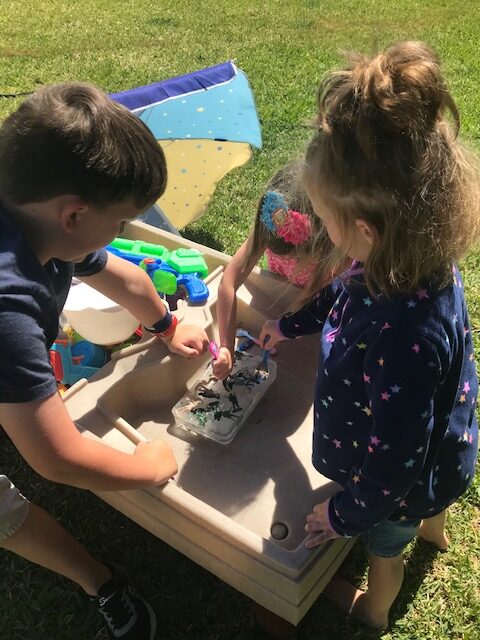 In just a few weeks, my husband heads out to sea, and I’m having to have discussions I never dreamt of when I accepted this lifestyle. I’m in a spot now where I have to figure out how I will balance being a mother to three (8, 5, and 4 years old), running a company, assisting my son with virtual learning, and figuring out how to do life. I’m asking myself questions like these:
- If I get sick, how will I make sure my children’s basic needs are met?
- Will I self-quarantine and then if I need to be hospitalized call on a friend to take the children?
- What if one of the children gets sick?
- If my parents are sick, how will I deal with that weight solo?
- How much do I share with my kids, yet allow them to have the innocence of childhood?
When big life things have happened in the past, my village was able to show up. A great example was during my last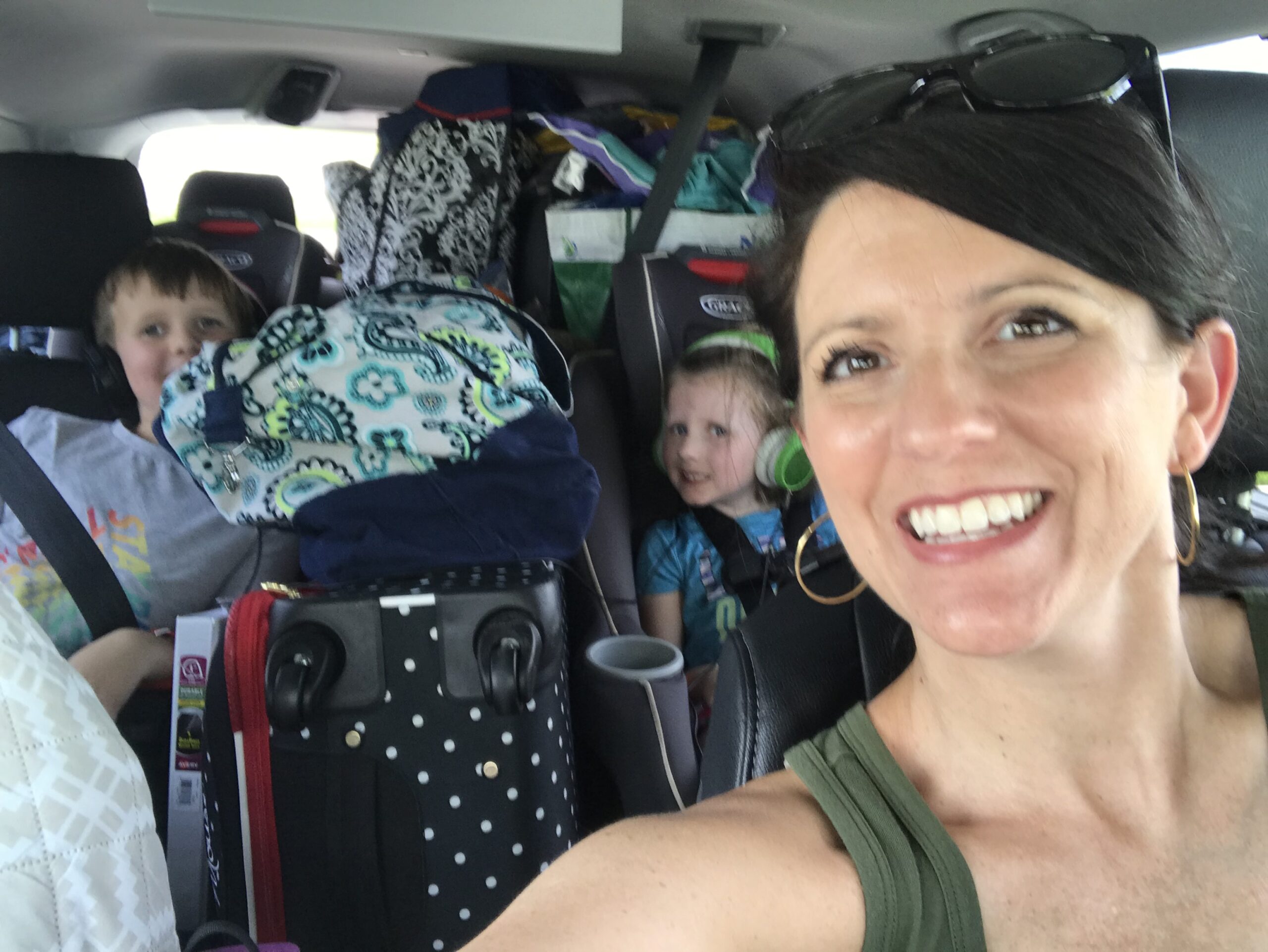 hurricane evacuation with three small children, I had one friend mail me a box of goodness for the kids to have to play with at the hotel. I had over dozen people in my neighborhood volunteer to help put up my hurricane shutters. I had two friends ship me groceries to the hotel. I had a friend connect me with someone they knew in the local community where I evacuated to help me find things to do with the kids.
Over the years, I’ve also had my mom show up time and again to be there to assist. The same goes for my in-laws.
Now it’s important that people don’t show up. Keeping our distance saves lives.
You all…I can be broken. The weight we’re asking our military (and health care, first responder, etc.) families to take on is not okay. We are not okay. Maybe some are, I suppose, but for those of you who feel like this is the biggest “ask” you’ve ever felt as part of this lifestyle, understand others are feeling the depth, uncertainty, and hurt you’re walking in. You are not alone.
I have no answers nor a magic wand to make our lives return to where they were. The only thing that’s getting me through is having truth in every conversation with my spouse. We’re creating our own family plan so we both have peace of mind when and if yuck happens. I’ve also told my spouse the depth of weight I’m being asked to carry. (And trust me—he’s being asked to shoulder a ton on his side, too.)
My encouragement is to live in your truth and strive to find happiness each day. When people ask, “How are you?” I’m actually answering with truth in how I feel in that moment. I’m also trying to find moments of happiness each day. In the suck there is sunshine, I’m certain. Every storm brings madness, but the sun always shows up. Always. I’m praying more—fiercely praying. I’m praying over my family like I always do, but I’m focusing on me, too.
Just know that some of us are breaking a little, and it’s okay to let others know. It’s important to note that being resilient doesn’t mean you don’t break. In fact, it is more about how quickly we can bounce back and recover in those times when we do. You are not alone. And in the end, we will be stronger and, who knows, maybe even a little more resilient.
P.S. There’s no shame if you need some help. Here are some great places to start: www.militaryonesource.mil/coronavirus and www.militaryfamily.org/what-military-families-need-to-know-about-covid-19.
If you’re a trying to lead people through this madness, you might want to check these out, too: 20 Tips for Leading Your Business Through Challenging Times and Powerhouse Planning Goodness and Resources: For the Freelancer and the Business Owner
Client Spotlight: Coastal Addiction
 Sunshine and sea foam, surfing, diving, fishing. It’s not just a tagline on a vacation brochure—it’s a lifestyle, and Coastal Addiction is all about quality products that personify that lifestyle. Whether sun and sand are your part-time interest or your full-time obsession, here are three reasons (of many) why you’ll want to support this business.
1. Coastal Addiction is a disabled veteran owned business. Owner Tommy Bowling served 12 years in the Marine Corps, and as the saying goes, “There’s no such thing as a former Marine.” He runs Coastal Addiction with the same heart, drive, and discipline he learned in the Corps. Both personally and professionally, there is no “I can’t” for Tommy (or for anyone in his presence, for that matter). There is only “I’m currently unable to” and then a commitment to work on turning that into “I can.” This can-do attitude motivates Tommy and his team to continually provide exceptional service and products.
2. Products are “made in the USA” with a focus on quality. Almost every product line we wear today is made in China and known for a very short life, falling apart after only a few times worn. Coastal Addiction believes in supporting American manufacturers. Their products include a complete line of tees sized for children age two all the way up to adult. Just about all of their products are made in the USA, and they test every product for quality and durability. They use DTG (direct to garment) imprints, which mean you can count on improved picture quality, clarity, and life of the product. And made-in-the-USA hats are on their way, with images embroidered to last!
Tommy says, “We are most proud of the quality of our products. Consumers today vote with their dollars and so many brands take their customers for granted. We don’t—we feel honored every time someone buys a product from Coastal Addiction.”
3. The company is committed to charitable work. After leaving the military, Tommy began participating in endurance events. Wanting these races to serve a greater purpose, he chose to raise money for charities he cared about. With each race, he far surpassed his fundraising goals and raised much-needed funding for nonprofit organizations.
In 2017, Tommy and Kellie Bowling (Tommy’s wife and business partner) started Warriors 4 Kids with the goal of  recruiting other endurance racers to fundraise to support children’s causes. To this day, Tommy continues to participate in ultra-endurance events, with every dollar raised either going directly to children or promoting awareness for kids in need. Everyone who works with Warriors 4 Kids is a volunteer who donates their time and money to make a difference in the lives of children. Coastal Addiction plans to continuously provide charitable support to coastal-related nonprofits like the Sea Turtle Rescue and children’s causes through Warriors 4 Kids.
(Make sure to follow Warriors 4 Kids on Twitter and Facebook! You can support their work here!)
If your interest in the coastal addiction lifestyle extends beyond great looking, high-quality, made-in-the-USA apparel, you’ll want to stay tuned! The company is creating Coastal Addiction TV on YouTube where they’ll feature weekly shows covering the coastal lifestyle. They have been in talks with local fishing guides, surf schools, and dive charters to film shows covering a range of topics of interest to fans of the coastal life.
And plans are in the works to offer trips to destination locations where you could be selected to join the adventure and be a part of the episode as well! For information about these upcoming travels and more, like and follow Coastal Addiction on Facebook!
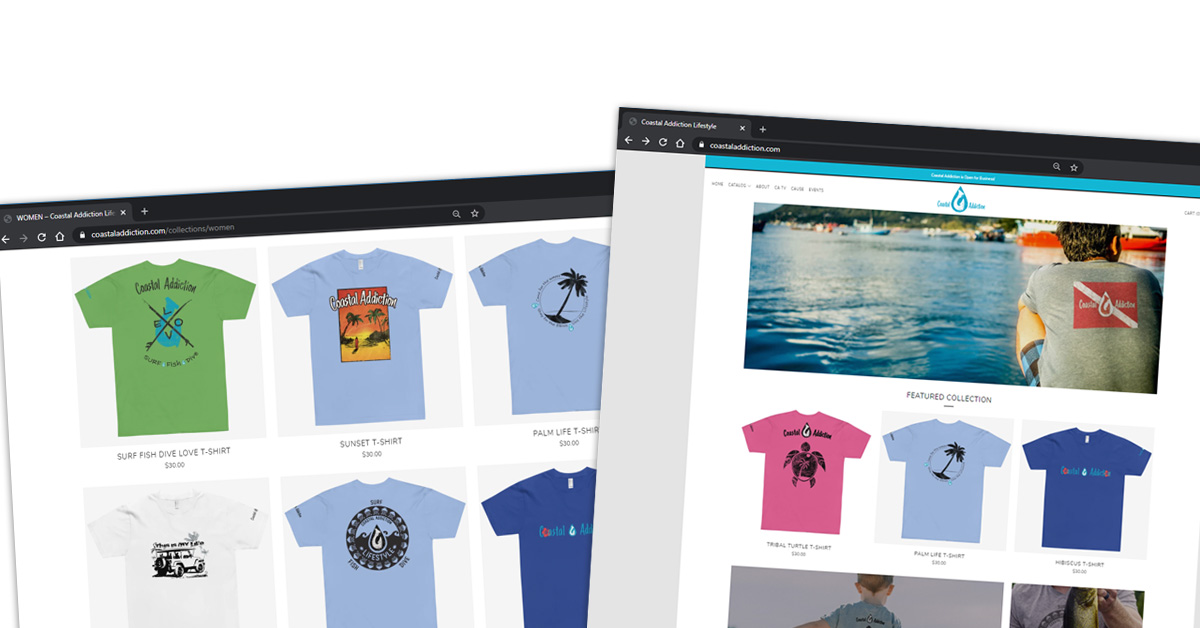 So where can you gear up in the latest and greatest coastal-themed apparel? You won’t find Coastal Addiction in stores—they’re committed to monitoring quality by controlling their product line from manufacturing to sales. But you can shop high-quality, American-made products on their website.
A disabled veteran owned business focused on supporting American-made products and committed to giving back to those in need—Coastal Addiction is an apparel company that’s providing so much more than apparel.
20 Tips for Freelance Success
Freelance work has grown exponentially with the creation of the internet. The trend toward freelance work continues to grow, according to several studies, due to the flexibility for individuals to choose their place of work. Some freelancers choose to work from home; others opt for a favorite coffee shop or a coworking space with friends or colleagues. Many freelancers have adopted a travelers’ lifestyle that allows them to work online and travel the world at the same time. In this resource, we provide 20 tips to help freelancers succeed no matter their preferred location or field of work. We’ve divided our tips into four sections: goal setting, budgeting, time management, and adapting.
Goal Setting
Tip #1: Envision your ideal life. What is it you see? What are you doing and where are you working from? Once you have the vision, begin working on the details that will help you get there.
Tip #2: Create short- and long-term goals. With a vision in mind, which is your end goal, create short-term goals for the next three, six, and twelve months. Developing an additional long-term goal of three or five years can also be helpful. These goals will help you identify priorities and create a timeline. Keep these goals somewhere you can revisit regularly.
Tip #3: Write SMART goals. That is, goals that are specific, measurable, attainable, relevant, and time bound. Instead of simply saying, “I want X more clients by a certain date,” be specific in the type of clients you want. Are they design focused or brand development clients?
Tip #4: Believe in yourself. You’ve set your goals based on the vision you see. Now it’s time to be confident in your abilities and the goals you’ve created. If you’re not confident in yourself and your goals, it will be much harder to achieve them.
Tip #5: Embrace your fear of success. According to several scientific studies, your fear of success might be stronger than your fear of failure [1]. Acknowledging your fear of success and facing these fears for what they are may give you a more mindful and productive relationship with your goals.
Budgeting
Tip #6: Track your expenses. If you aren’t already, there is never a better time to start than now. You need a budget, and the best way to create one effectively is by knowing how much you are already spending. Therefore, you should track your expenses for three months. You don’t need to track all of them, but specifically pay attention to the flexible expenses—items that can vary and/or those you can cut if needed.
Tip #7: Plan for discretionary spending. When you’re employed with a fixed income every month, you know your limits on spending for nonessential and luxury items, but as a freelancer, your income can vary from month to month. When you’re working for yourself, it can be easy to go online and find all sorts of things to buy. Curb the temptation and sock extra discretionary money away for the vacation you’ve always dreamed of instead.
Tip #8: Use the 50/30/20 proportion rule. This rule helps you build a budget by using three spending categories. Based on your expense tracking over a three-month period, you can place all of your expenses into the essential expense category (50% of your income), the flexible spending category (30% of your income), and the remaining 20% should be placed in a savings account, investments, or in debt-reduction [2].
Tip #9: Spend wisely. It’s common to face times when you have to cut your expenses, but freelancers may experience this more often than others. There are several ways to reduce spending and make sure that the money you do spend is used wisely. For example, go grocery shopping once a week based on meals you’ve preplanned; cut down on alcohol consumption; and/or purge assets you are not attached to (jewelry, antiques, etc.). This money can help you pay off personal debts or allow you to go for that splurge you’ve been dreaming of—and you won’t have to touch your savings!
Tip #10: Create short- and long-term savings. If you don’t have one yet, it’s time to start an emergency savings account for unexpected expenses. Financial planners suggest one month’s worth of income [2]. A long-term savings account should also have three to six months’ worth of income set aside to handle slumps in income that can befall even the best freelancers. Dividing things up helps you keep track of what you have and what you need to replenish your funds.
Time Management
Tip #11: Make a schedule. Freelancers often have a flexible schedule, which leads to one of the most common mistakes for freelancers: Flexibility is not an excuse to procrastinate. You don’t have to work 9 to 5—maybe your optimal work time is 10 to 6 or 8 to 4—but no matter what schedule you choose, it’s best to stick to it.
Tip #12: Take days off. While you plan your schedule, do not forget to take time off—not just weekends but also vacations. Remember that you don’t need to have traditional weekends, either. Maybe you schedule your days off on Tuesday and Friday each week. Do whatever works with your schedule, your clients, and your needs!
Tip #13: You’re in charge of your time. As a freelancer, your responsibility is to do what you say you’re going to do, to the best of your ability, to help your clients achieve their goals. The downside of being this super-productive and reliable freelancer in a world where most people don’t follow through is that your clients may come to overly rely on you. Don’t forget to take charge of your time, especially when clients are in different time zones and try to call when you are off hours.
Tip #14: It is okay to say no. The most importance time management skill you have at your disposal is your ability to say no. Boundaries are a safe and productive way for you to manage and negotiate time and responsibilities. One of the greatest benefits of freelance work is that you are your own boss in most situations, but don’t squander this perk by forgetting you can say no.
Tip #15: Write it down. If you’re spinning your wheels, feeling unproductive, and procrastinating, start a time diary. For a set period of time, perhaps start with a week, write down everything you do and when you do it. At the end of the allotted time, analyze where you’ve been wasting hours (on social media?) or simply failing to bill appropriately for time spent on a project. Adapt accordingly!
Adapting
Tip #16: Embrace networking. Few freelancers enter this arena with the intention to network, but when you need more work, attending industry conferences, panels, and mixers is something you need to consider in order to meet new people. While these networking events are clearly important, don’t forget to look to past clients as well; they are often the best salespeople you’ll ever need.
Tip #17: Seek self-improvement. Times of slump at any point in your freelancing career are the optimal time to seek additional work through self-improvement. This downtime is an opportunity to take stock of your evolution—what you enjoy doing most, what training you may need, and how you can go from where you are to the next level in your business.
Tip #18: Think with mobility in mind. If you’ve been a freelancer for a long period of time, you may rely on a desktop, which is useless when you need to travel. To stay mobile, you’ll need a laptop or a tablet, or potentially both, so you have a backup option in case one fails for some reason. Always keep a backup flash drive so you can seamlessly transfer data across platforms in case of emergency, and remember that backing up data to an external hard drive or specialized app is your best friend.
Tip #19: Be proactive. Advertise yourself on freelancing networks. Find the sites that post freelance jobs and subscribe to their email list to receive new updates to the job board. Reach out to companies you admire. You’re the only one who can find your next job, so start your search. You’ve got this!
Tip #20: Prepare to adapt and overcome. Above all else, be willing to adapt to change. The growth of the internet and social media has taught us to expect change at rapid rates. By budgeting your income, managing your time, and setting goals, you are setting yourself up for success. But remember that change can happen rapidly, and if you’re too focused on your timeline, you may miss out of the next best opportunity to grow as a freelancer. Follow the latest trends and set yourself up to adapt and overcome every challenge you face.
CEO SPOTLIGHT
From Ski Lift Operator to Small Business Owner
By: Heatherlynn Akins
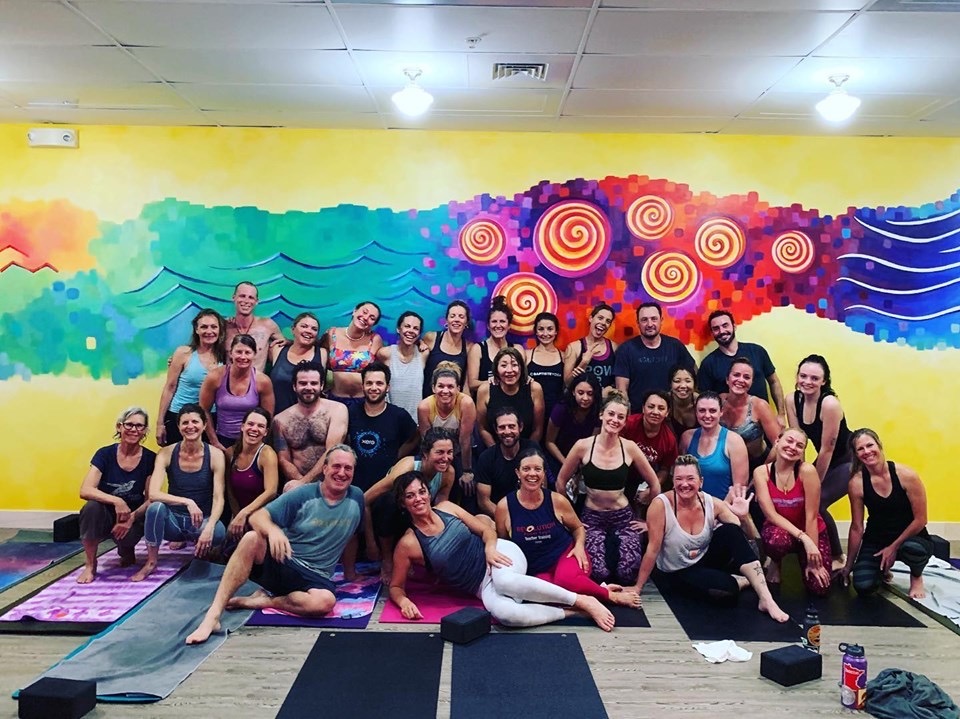 When Julie Kiddoo decided to take a year off after graduating from college in 1994 and moved to the Vail Valley in Colorado, she never thought she’d one day be a small business owner. Her parents had moved from their home state of Minnesota to Vail, and Julie thought it’d be a great idea to stay with them for the ski season. Little did she know that that decision would turn into a 25-year-long adventure in the Colorado Rocky Mountains, after meeting her husband when they both worked as ski lift operators in 1995.
Initially, Julie stayed in the ski industry. She held several jobs from the aforementioned ski lift operator to Vail Ski Patrol to guest services. Eventually, she started her own seasonal gardening business, which she operated for 12 summers before she took the plunge into full-time small business ownership. She’d been teaching yoga classes at a local club and felt limited in her capacity to lead and develop programs on a bigger scale. “I had fallen in love with Baptiste Yoga, which is the style of yoga we offer, and knew that I wanted to be able to share the practice and methodology without any constraints,” she says.
Julie knew how personal the journey to self-growth and self-recovery could be. She also knew how rich and meaningful yoga could be to that journey. Still, she held back, wondering if opening her own studio was really the right thing to do. Fearing the unknown and potential failure, and now a mom to two children, Julie just couldn’t pull the trigger on her dream. When one of her favorite yoga teachers and mentors was getting ready to open her second studio, Julie decided to ask her about what it was like to step into the shoes of a small business owner. She recalls her mentor telling her, “Fear will be present, but the risk of not doing it at all is far greater than the risk of doing it and failing.” It was at that moment that Julie knew it was time, regardless of the risk involved.
In 2012, Julie opened Revolution Power Yoga in Avon, Colorado, a small town located near Vail. “The biggest challenge,” she says, “was opening a yoga studio in a brand-new market, not knowing if it would succeed.” The second biggest challenge, and one nearly as great, was finding a location that would meet her needs. It is a challenge to be a full-time resident in a mountain resort town. Space is at a premium and, as everyone knows, location is everything. Luckily, everything fell into place and Julie and her family never looked back. (more…)
Did You Know?
Freelance survival is all about working smarter, not harder. That, and knowing when to make time for yourself, whether that be focusing on your personal health and wellness or spending a little extra TLC on your professional concerns. Powerhouse has tons of resources to help you find the perfect balance between your hard-charging career needs and life. Check out our career resources and life resources for tons of information to make your “survival” just a little easier.
MARKETING BUZZ
3 Freelancer Survival Tips
By: Julie Kirchner
 Monitor your time. Knowing how much time you spend on typical client deliverables is key to marketing your business successfully, managing your time, and giving you the confidence to say yes (or no) to additional projects at a given time.
Even for projects that bill by completed deliverable (versus hours), you’ll want to track the amount of time it takes you from start to finish, for your own knowledge. Are you charging the right rate, given the time it takes? Do you need to schedule some time to learn a new digital tool that can help you scale projects faster and cut down on wasted time?
To start tracking your time on work projects, try using a time tracker tool such as Toggl, a free app that allows you to track your work hours for different projects and clients conveniently from your phone. You can add depth to the information you track (such as clients and project titles) and even run simple, visually appealing reports online at the end of the month that really showcase how you’re dividing your time. Over time, you’ll develop a keener sense of the time involved in each type of deliverable. This can also help you set more accurate rates when you’re asked for quotes in the future.