Fourteen Years of Powerhouse: The Visionary and the Future
Fourteen Years of Powerhouse: The Visionary and the Future
Fourteen years ago, Jessica Bertsch was a military wife trying to balance corporate and family life with constant moves. It wasn’t easy. Her husband, Fritz, deployed over twenty-five times while he was active duty in the U.S. Coast Guard. Companies were wary of hiring someone that would only be on location for a year or two. She spent a few years wanting to tackle the business world as an entrepreneur but struggled to figure out how. Then a conversation with her father-in-law changed her life.
“He asked me how Powerhouse was different from any other freelance agency,” Jessica says. “Then it clicked. We would be primarily based on military spouses. A market that is overqualified and underutilized.”
The plan was for military spouses to come in and build upon their career. They would stay for six months to a year, develop skills, and move on. To Jessica’s surprise, however, the company was a place where freelancers found a work home. “People came and fell in love,” she says, “and they just stayed to make Powerhouse their career. That, I did not predict.”
But what did that mean for structure? If people wanted to stay, didn’t it make sense to be a full-time, “butts-in-seats” company? “It [would be] easier for me,” Jessica says, “because right now, there’s so much flexibility that I have little to no control over things.” To settle the debate, Jessica turned the question over to Powerhouse’s greatest strength: its team members.
“We started having town hall meetings last year to find what feels healthiest and what feels right,” Jessica says. They all echoed a similar view. “We are Powerhouse because we have this unique structure,” Jessica explains. “We need to stay who we are while scaling the way we are, to be open and honest about the growth and the challenges.” It was decided: Powerhouse employees would stay as primarily 1099 freelancers, to allow them the flexibility that Jessica first imagined. With the projected growth, Powerhouse may have to pivot some of its leadership positions to employee status, but that will be determined in 2027.
As popular as the company was with its freelancers, however, there were hurdles Jessica had to overcome. The biggest was finances. “Do I pay myself or reinvest? How do I structure the company’s finances? It took a long time—years—until I decided to pay myself,” she says. Jessica is a huge proponent in doing what you love and finding joy. Finances do neither of those for her.
Luckily, her recently retired husband has her covered. “He’s been secretly volunteering for Powerhouse since day one. He’s been handling the finances, especially when I didn’t have the finances to bring on accounting assistance,” Jessica says. She added that he would have full-time responsibilities now that he’s retired from the Coast Guard and has joined Powerhouse as its vice president of operations and finance.
Still, Jessica had to organize and run a company as a military spouse. Her husband’s career brought her to ten different stations—seven of which while managing Powerhouse. “It was really hard,” she says. “For so many years, I didn’t realize how hard it was. And I never let people know. Every time we move, I have to keep state compliance. It’s a pain, being based in Virginia. I have to register doing business in every state I move to.” The solution to this problem? Communication, via internal meetings meant to share stories with her employees and boost company morale.
“I started the State of Powerhouse [quarterly internal meetings] so I could tell people about all the awesome stuff happening,” Jessica says, “and to let everyone know that this is hard. Like, super hard. I step back and realize it’s hard for a lot of us, so we want to focus on the good stuff sometimes.”
To Jessica, “good stuff” is intentionally vague. Sometimes she wants to highlight large grants her team secured for a client. Other times, she’s celebrating a work anniversary, birthday, or new baby.
“Good stuff” also has a different meaning to Jessica. Powerhouse donates ten percent of its gross revenue to charitable causes through its Share the Goodness program. “As long as I’m morally aligned with the organization,” Jessica says, “I say, let’s do it. We’re funding scholarships with it and large-scale things. Even private things, like helping a young man go to dance camp, or helping someone cover their mortgage.” Jessica roots the Share the Goodness program in her faith. “Ten percent is my tithe. Even when I wasn’t paying myself, we were still giving back ten percent. I felt called to do it,” she says.
Fourteen years later, Powerhouse is continuing to serve. Indeed, fourteen years was longer than Jessica could have hoped for. “Most companies don’t make it past year six or seven,” she explains. “When we got ready to have our ten-year celebration, that was a big moment for me, because it just hit me that, ‘Oh my gosh, we made it ten years!’ Next year, we’re doing something for our fifteen-year anniversary. It’s wild that we can.”
Jessica envisions a bright future for Powerhouse, and she plans on delivering it by sticking to what works. “We have grown through primarily organic growth. We’ve grown through word of mouth and success after success. If we have success with a client, then they go talk to others about it. I plan for more organic growth. Word of mouth. Growing our brand on our service and capabilities,” she says. She also wants to embrace artificial intelligence to take Powerhouse forward. “We’re not fearful of the future,” Jessica says. “We’re trying to embrace it. To get ahead of it. I’m building my own virtual chatbot assistant to help me do behind-the-scenes things, and in the first few months after AI exploded into the business world, we created an AI policy for how to use it. We also are in the process of building phGrants to do even bigger things to support our nonprofit world.”
As Powerhouse continues to grow, Jessica wants to keep all that makes Powerhouse special: its unorthodox yet effective structure, fantastic team members, close relationships with clients, and its charitable Share the Goodness program. Jessica looks to the future with the same energy she had in this interview: with a shrug, smile, and a nod.
“This is us,” she says. “We are Powerhouse.”
Why Outsourced Teams Work Best When They Act Like Partners
 Why Outsourced Teams Work Best When They Act Like Partners
The difference between a vendor and a partner is rarely a line item. It’s how the work gets done.
Outsourcing is no longer the cost play it was a decade ago. In Deloitte’s Global Outsourcing Survey, which gathered responses from more than 500 executives worldwide, 50% reported using outsourced services for front-office capabilities such as sales, marketing, and research and development, functions that used to live firmly inside the building. Deloitte also reports that 67% of organizations have adopted outcome-based outsourcing models that prioritize measurable results and innovation rather than billable hours. Put simply, organizations have stopped buying tasks. They’re buying outcomes.
Outcomes, though, are harder to hand off than tasks. The same Deloitte research found that 70% of executives have pulled some previously outsourced scope back in-house over the past five years, and the motives have less to do with price than with quality control and rebuilding internal expertise.
Read that carefully. The work didn’t come home because it cost too much. It came home because it never quite fit. That is almost never a talent problem. It’s a relationship problem, and it’s a solvable one.
At Powerhouse Planning, we’ve spent years watching what separates an outsourced engagement that drains a leader’s calendar from one that gives them their week back. It usually comes down to a single distinction: A vendor completes your scope of work, while a partner takes ownership of your outcome. Below is what that difference actually looks like in practice, and what to look for when you’re evaluating whom to bring alongside your team.
Partners learn your mission before they touch your deliverables. A vendor asks what you need. A partner asks why you need it, who has to act on it, and what happens if it doesn’t land. That context is not a nicety. It’s the difference, for instance, between a grant narrative that recites your programs and one that makes a funder feel the gap you’re closing. When an outsourced team understands your mission well enough to defend it in a room you’re not in, the work stops needing so many rounds of revision. You spend your review time confirming direction instead of correcting it. Ask a prospective partner what they’d want to know about your organization before producing a single deliverable. The depth of that answer tells you most of what you need to know.
“Powerhouse Planning stepped in when we needed to fill an immediate marketing need, providing incredible marketing and HR support whenever we needed it. They have become strategic partners as invested in our growth and success as we are.” – Michael Wright, Vice President, Business Development, JANUS Research Group
Partners bring you the ideas you didn’t have the bandwidth to have. Bandwidth, not budget, is the scarcest resource in most organizations. Leaders know exactly which projects are sitting undone. What they rarely have is the room to step back and see the ones they haven’t thought of yet. A true partner shows up with more than a status update. They notice you don’t have an annual report, a consistent way to launch a campaign, or the marketing materials you need to target the customers you’re most interested in, and they propose it before you ask. This is what we mean by thought partnership, and it’s consistently the piece our clients name first when we ask what they value. Real thought partnership is not upselling. It’s noticing.
“Working with Powerhouse has been a genuine partnership where they have joined our team and filled critical supporting roles with team-oriented passion and flexibility whenever necessary. This has allowed our small full-time staff to focus on the needs of our clients, increasing our efforts and efficiency.” – Gene Anderson, Executive Director, Operation: Job Ready Veterans
Partners communicate before you have to chase them. Communication is the quiet failure point in outsourced work, and the evidence suggests the weak link sits on the management side of the relationship far more often than the talent side. In that same Deloitte survey, 70% of executives said their vendor management function is not fully mature, and only 20% said a vendor management office owns their external workforce strategy at all. Translated out of consulting language, most organizations are managing outside teams without a real system for doing it. A good partner absorbs some of that load rather than adding to it. They assign clear ownership, state a timeline out loud, and tell you the moment the timeline is at risk. That last part matters most. Anyone can report good news on schedule. A partner tells you about the problem while there’s still time to solve it together.
Partners tell you the truth, even when it cost them the work. There is a particular kind of trust that gets built the first time an outsourced team says, “We’re not the right fit for this piece, and here’s who is.” It feels counterintuitive from a business development standpoint, and it is the single fastest way to earn a long-term relationship. The same is true for honest pushback. If a strategy won’t get you where you want to go, a partner says so before the invoice, not after the results come in. Vendors protect the scope. Partners protect the outcome, and sometimes that means telling a client something they’d rather not hear.
“Powerhouse will honestly assess if they can help or recommend alternative paths if they can’t. Their genuine goal is to see you succeed, regardless of whether they’re the right fit for you. – Angela Degnan, Executive Director and Cofounder, Zip With Us®
Partners build capacity that outlasts the contract. A vendor’s contribution ends when the deliverable is delivered. A partner leaves infrastructure behind: a documented grant or marketing library, a template set your staff can actually use, brand standards written clearly enough that a new hire can follow them, a communications calendar that survives turnover. Infrastructure can feel like a strange thing for an outsourced provider to invest in, because the better the systems, the less dependent the client becomes. We think that’s exactly the point. Organizations that grow into new capabilities tend to bring their partners along, and organizations that feel trapped tend to leave. Strong systems are how a partnership earns its next chapter.
“Partnering with Powerhouse has been a great experience for the Wright Museum of WWII. Their innovative approach and unwavering commitment to our organization have brought new energy and ideas to our marketing approach. Thanks to Powerhouse’s expertise and collaborative spirit, we’ve been able to enhance our marketing collateral in more dynamic ways. We are incredibly grateful for their support and look forward to continuing this partnership.” – Stephen Farley, Wright Museum of WWII
Partners give you a team, not a seat. One of the most underrated advantages of the right outsourced model is range. A single hire, no matter how talented, brings one perspective and one skill set. A well-built remote team brings just that: a team. From writers to designers, from quality assurance specialists to strategists and project managers, all contribute their unique perspectives and skill sets to the same problem. And the result is more nuanced than any one of them would have produced alone. It also means capacity doesn’t disappear when one person takes leave or moves on. For a growing nonprofit or business, that continuity is often worth more than the individual line items on the scope of work.
“The Powerhouse team gave us access to marketing expertise that would have been difficult to build internally. From strategic planning to content creation and analytics, their team handled every aspect of our social media efforts with professionalism and creativity. The results have exceeded our expectations, helping us expand our reach, strengthen our brand presence, and engage our audience in meaningful ways.” – Jay Chapman, President/CEO, Hartman & Hartman
Here’s the bottom line: Whether you get a vendor or a partner isn’t determined by contract size, engagement length, or price point. It’s determined by behavior, and behavior shows up early. When you’re on that first consultation call, listen for what they ask you. Do they want to understand your mission or just your deliverables list? Do they name an owner and a timeline or speak in vague reassurances? Will they tell you honestly when they’re not the right fit? Those answers predict the next two years of the relationship far better than any capability deck.
Outsourcing works best when it stops feeling like outsourcing. The goal is never to hand work away. It’s to bring the right people alongside you so your mission can move faster than your headcount allows.
Powerhouse Planning was built on the belief that outsourced support should feel like an extension of your team, not a transaction. Our total remote team solution gives you access to an experienced bench of thought partners, writers, marketers, designers, and communicators at a scale that works for your budget. Contact us today to start the conversation.
New Powerhouse Team Member
New Powerhouse Team Member
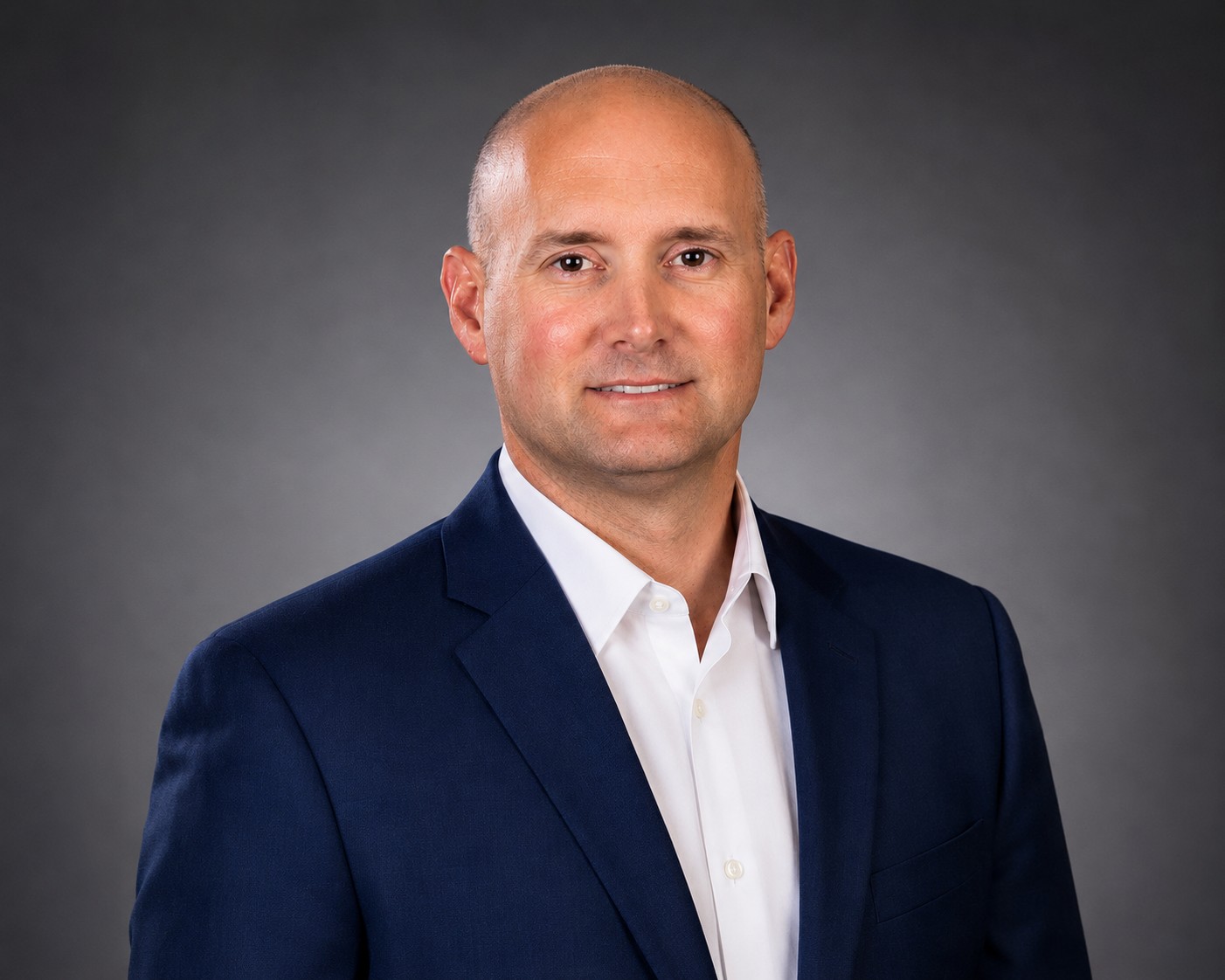
Fred S. Bertsch brings more than 20 years of executive leadership experience overseeing operations, financial management, strategic planning, and organizational performance for large, complex organizations. As Powerhouse Planning Vice President of Operations and Finance, he leads the company’s operational and financial functions, driving strategic planning, budgeting, and business operations while ensuring sound fiscal stewardship and exceptional service to its clients.
Before joining Powerhouse Planning, Fritz retired as a captain in the United States Coast Guard after a distinguished 25-year career. In his final assignment as chief of program analysis and evaluation, he directed enterprise-wide strategic planning, budget analysis, performance management, and risk management for a $14 billion organization. As the Coast Guard’s chief statistical official, chief performance officer, and chief risk officer, he advised senior executives on financial priorities, resource allocation, investment decisions, and long-range organizational strategy.
Throughout his career, Fritz successfully led multidisciplinary teams, managed complex operational portfolios, and developed data-driven solutions to improve organizational effectiveness and financial performance. His experience spans executive leadership, strategic resource management, organizational transformation, and operational excellence, with a proven ability to align people, processes, and financial resources to achieve measurable results.
Fritz holds a Ph.D. in homeland security and leadership, master’s degrees from Purdue University and the U.S. Marine Corps Command and Staff College, and a bachelor’s degree in operations research from the U.S. Coast Guard Academy. He brings a disciplined, analytical, and results-oriented leadership approach that helps Powerhouse Planning deliver innovative solutions, sound financial management, and sustainable growth for its clients.
Inside the Partnership: Zip With Us®
Inside the Partnership: Zip With Us®
How a fast-growing pediatric cancer nonprofit found the team—and the thought partnership—to keep pace with their mission
 When you’re evaluating a consulting or agency partner, you can read a lot of websites. You can watch a lot of demos. You can sit through a lot of capability decks. What’s harder to find is the unfiltered take from someone who’s actually been on the other side of the engagement. The leader, or client, who hired the team, watched the work get done, and can tell you what was different about it.
That’s the premise behind our new series, “What Makes a Powerhouse Team Different? Insights from Our Clients.” Over the coming months, we’ll be sitting down with the organizations we work alongside, from nonprofits to mission-driven businesses and the leaders behind them. We’ll ask what brought them to Powerhouse, what working together looks like day to day, and what makes the experience different from the consultants and agencies they’ve hired or worked with before. In their own words. At Powerhouse, we believe the best way to showcase what our total remote team solution brings to the table is to hear it from those who have experienced it.
We’re starting with Zip With Us®. Here’s what they had to say.
Meet Zip With Us®
The Zip With Us® origin story lies with founders Angela and Brian Degnan’s son, Thatcher. When Thatcher was just two years old, he was diagnosed with Acute Lymphoblastic Leukemia (ALL) while on a family vacation. The Degnan family had just moved back to Pittsburgh, Pennsylvania from Miami, Florida and were taking advantage of living closer to Brian’s New England-based family. Thatcher hadn’t been feeling well, and when he didn’t seem to get better after a few days his parents took him to the hospital to be checked out. That started an almost 1,500-day journey with ALL.
During those first days post-diagnosis, Thatcher received a gift from one of his nurses: a yellow graphic T-shirt with a handsewn zipper on the upper chest, which made infusion days and countless emergency room trips a little more bearable. Angela says that at first she thought every child diagnosed with cancer received a similar gift, but she came to realize that Thatcher’s shirt was somewhat unique.
As her family’s journey with cancer continued, and Angela received more and more comments from medical staff and other parents about how amazing Thatcher’s shirt was, Angela and Brian began to realize that the T-shirt that made infusion days a lot easier was something that every child battling cancer could use. Thus, Zip With Us® was founded in 2018 as a 501(c)(3) nonprofit organization creating custom adaptive medical apparel to improve the treatment experience for patients, raise critical funds for research, and increase awareness of the daily challenges these children and their families face.
Today, Zip With Us® partners with over 200 U.S. hospitals and a few international hospitals to ensure that each infant, child, and young adult diagnosed with cancer and other serious medical complexities receives the gift of adaptive apparel customized to meet their treatment needs. Additionally, they offer their adaptive apparel through their online store. Zip With Us® is committed to providing barrier-free access to their products, ensuring all children have access to their apparel regardless of circumstances.
Angela, who serves as the Zip With Us® executive director, marvels at how their small, home-based nonprofit has expanded so rapidly, even through COVID. “We’ve had such success, onboarding nonstop basically since we opened,” she says. As we all know, rapid growth, even for such a worthy cause as that of Zip With Us®, can come with a lot of professional headaches as a small group of nonprofit staff work feverishly to keep up with the pace of growth. For Angela and Zip With Us®, help came in an unexpected way.
Enter Powerhouse
In one of those twists of fate, Angela signed up to run in a local Dick’s Sporting Goods’ “Run for a Reason” event where Zip With Us® was registered as an official charity. There, she met Krista, a local teacher who learned about Zip With Us® through the pediatric cancer community. “Krista’s nephew had been diagnosed with a childhood cancer,” Angela says of the fateful meeting. “We met during the program preparations, and it turned out that her sister worked for Powerhouse. Krista told her sister about us, her sister in turn told Powerhouse President Jessica Bertsch about us, and she reached out, offering an in-kind grant through her company’s Share the Goodness charitable giving arm.”
That first partnership resulted in a new horizontal logo design for Zip With Us®, a T-shirt and onesie drive kit, coloring sheets for pediatric patients, and email blast templates the nonprofit could use for a variety of needs. “She came in and asked what she could do,” Angela says, “and then she proceeded to offer suggestions and ideas I probably wouldn’t ever have had the time to think about. For instance, she provided a complimentary annual report that she created and designed when she realized we didn’t have one. It’s not something I had the bandwidth for at the time, but I bet I’ve handed that report out at least 50 times by now.”
The Partnership in Practice
As the partnership grew, Zip With Us® leaned more and more on their Powerhouse total remote team solution, not just for marketing collateral but also for organizational support and eventually a whole host of nonprofit services, including grant writing and grant nurturing. “I feel very supported by Powerhouse,” Angela says. “I feel heard, and I’m surrounded by glorious minds on the Powerhouse team. Everyone has different backgrounds and many are military spouses. I can’t stress how much the qualities of those military spouses shine through. The Powerhouse team is professionalism meets warmth meets a can-do attitude.”
For Angela and the Zip With Us® team, partnering with Powerhouse has been seamless and wonderful. “When I partner with someone, I am looking for someone who takes the work as seriously as I do. Powerhouse does that. From day one, they have embraced our mission as their own. They’ve really become a true team, and I see the relationship as long-term at this point,” she says. Besides the tangible solutions Powerhouse brings to the table, Angela says that she’s had lots of conversations centered around growth with the Powerhouse team. “The thought partnership has been amazing,” she says. “So very helpful. Not only when it comes to dreaming about next steps but in stepping up to help us make them happen.”
What Makes Powerhouse Different
“There are so many layers of logistics in running a successful nonprofit,” Angela explains. “You can feel like you’re on the train to crazy town a lot of the time. Jessica and the Powerhouse team understand this. They have this incredible ability to adapt to my personality and work within my parameters without question and in a very real way.” She adds that for her personally, the organization that Powerhouse has brought to her has been the most helpful. “Everything with Powerhouse feels very purposeful,” she says. “There’s no wasted time when you’re in meetings with them, but at the same time there’s this feeling of being with family. It’s professionalism and personal connections all rolled into one.”
Throughout the partnership, Angela says the organizational aspect has become increasingly important to her. Whether it’s engaging in honest and open communications around deadlines, having strategic conversations about sustainable growth, or seamlessly meeting the specific needs of Zip With Us®, the Powerhouse total remote team solution has exceeded her expectations.
“I’m incredibly proud not only of what we’ve been able to accomplish with Powerhouse but also that we can afford access to this amazing team of women who provide services we likely couldn’t sustain if we had to hire entirely in-house,” Angela says. “I know there are certain positions we will continue bringing in-house as we grow—for example, we recently hired a CFO—but the services Powerhouse provides work so well for us that I don’t feel any need to change that.”
Under the current contract with Powerhouse, Zip With Us® utilizes grant-writing and nonprofit support services. “So far, I’ve worked with three or four women with extensive grant experience,” Angela says. “That expertise alone would make the partnership worthwhile, but Powerhouse has also helped us build an entire grant library and infrastructure that will support us long-term. If we ever need to fully write grants independently in the future, we’ll already have the tools, resources, and foundation in place to be successful.”
Angela also emphasizes the value of the collaborative team approach. “The creative minds involved through our Powerhouse contract are truly mind-blowing and bring so much value to the organization,” she says. “One person alone could never achieve the same results as the collective Powerhouse team. The impact is simply greater all around.”
For Angela, Powerhouse’s transparency has been a breath of fresh air. “The beauty of Powerhouse is that whenever we discuss a project or idea, there’s immediate ownership, a clear plan of action, and a defined timeline. They are able to execute at a much faster pace and consistently deliver when we need something done. When the Powerhouse team shows up, everything is focused, organized, and completed the way we need it to be,” she says.
Angela says that one of the most valuable aspects of the partnership is the consistent communication and visibility throughout the process. “I never have to worry about where a project stands because I always know exactly where it is on the path to completion,” she says. “The communication is stellar.”
When asked if there’s a particular project Zip With Us® has completed with Powerhouse that she is most proud of, Angela initially said that it’s too difficult to choose just one. After reflecting, she points to how many of the original the Share the Goodness deliverables continue to provide value today.
“The T-shirt and onesie drive kits are still actively used on our website and have freed up an incredible amount of time for our employees and volunteers, who previously had to build each drive individually,” Angela says. “And the grant organization system has been an absolute dream. It eliminates the constant searching for documents and provides instant access for board members and our accounting and leadership teams.” She adds that having a dedicated team managing and maintaining organizational documentation has been transformative for Zip With Us® as the nonprofit continues to grow. “Just knowing someone is overseeing and organizing all of that is huge for us,” she says.
The Last Word: Advice from a Founder
“Powerhouse is the best value when it comes to mission-aligned support,” says Angela. “They genuinely care about nonprofit success and operate with a level of integrity and strong values that is reflected in everything they do.” Angela says she wishes more people understood the depth and impact of the partnership between Powerhouse and Zip With Us®. “The feedback has been overwhelmingly positive in every way,” she says.
With Powerhouse, you get an entire team and access to multiple skills sets and creative minds. “Getting so many different people with varied experience and fresh approaches means end results that are nuanced and professional and result in high-quality products achieved at accessible pricing for a nonprofit budget. They even identify bottlenecks and propose solutions before being asked. It’s a no brainer to partner with Powerhouse,” Angela says.
“If you’re even thinking about partnering with Powerhouse, my best advice is to take the initial consultation call,” Angela recommends. “It costs you nothing and demonstrates an honest approach. Powerhouse will honestly assess if they can help or recommend alternative paths if they can’t. Their genuine goal is to see you succeed, regardless of whether they’re the right fit for you.” If you’re still on the fence after that initial consultation, Angela recommends starting with one helpful project to see the immediate positive impact Powerhouse can have. “Let the relationship grow from organic results,” she says. “I promise it’ll be worth your time.”
Powerhouse Planning Earns Agency Workplaces Award for Exceptional Culture
Powerhouse Planning Earns Agency Workplaces Award for Exceptional Culture
 Fairfax, Virginia (June 15, 2026) – Powerhouse Planning has been officially recognized for the Agency Workplaces Award, earning an overall culture score of 98 and an “Exceptional Culture” rating based on team survey results.
The Agency Workplaces Award (AWA) recognizes agencies that prioritize strong workplace cultures, meaningful team experiences, collaboration, and sustainable ways of working. Powerhouse Planning’s score reflects the company’s continued commitment to creating a people-first, remote work environment where team members feel supported, connected, and empowered to do their best work.
Powerhouse Planning (Powerhouse) was recognized for its intentional approach to building and maintaining culture across a fully remote team. The company’s workforce includes military spouses, veterans, and highly skilled professionals from across the United States who support clients through flexible, fully managed team solutions.
“Powerhouse has always believed that great work starts with great people,” said Jessica Bertsch, founder and president of Powerhouse Planning. “This recognition is especially meaningful because it reflects direct feedback from our team. We are proud of the culture we have built together, and we remain committed to listening, improving, and creating an environment where people can thrive personally and professionally.”
The AWA results highlighted Powerhouse’s supportive and collaborative culture while also offering helpful feedback for continued growth, including opportunities to strengthen communication around expectations, workload balance, and cross-team connection. These insights align with Powerhouse’s ongoing commitment to continuous improvement and intentional team support.
Powerhouse has built its remote model around flexibility, accountability, and connection. Through internal programs, regular check-ins, team development opportunities, and a strong focus on placing people where they thrive, Powerhouse continues to demonstrate that remote teams can be both high-performing and deeply connected.
This recognition adds to Powerhouse’s continued momentum as a workplace culture leader and trusted remote team solutions partner. The AWA reflects not only the company’s internal culture but also the values that shape its client work: responsiveness, collaboration, flexibility, and a commitment to meaningful results.
About Powerhouse Planning
Powerhouse Planning (Powerhouse) is a remote team solutions company that provides fully managed, high-impact talent to organizations worldwide. Powerhouse connects businesses with a collective of highly skilled professionals, many of whom are military spouses and veterans, delivering expertise across business growth, content creation, and event facilitation. Operating as an integrated extension of its clients’ teams, Powerhouse offers flexible, cost-effective solutions designed to fill critical skill gaps and drive measurable results. Through its Empowering the Homefront™ initiative and commitment to giving back, Powerhouse is dedicated to creating meaningful career opportunities for military spouses and strengthening the military community.
Website: powerhouseplanning.com
Facebook: facebook.com/powerhouseplanning
LinkedIn: linkedin.com/company/powerhouse-planning-llc
Powerhouse Planning Earns 2026 Global Recognition Award for Excellence in Workplace Culture
Fairfax, VA (April 16, 2026) – Powerhouse Planning has been awarded a 2026 Global Recognition Award, a distinction reserved for organizations demonstrating exceptional performance across leadership, innovation, service, and workplace culture. Selected from more than 15,000 annual entrants, fewer than 6 percent of applicants receive this recognition, placing Powerhouse Planning among a highly competitive and accomplished group of honorees.
Powerhouse Planning was recognized under the Workplace Culture category for building a high-performing, people-first organization that delivers consistent, measurable results for its clients while maintaining a deeply connected remote workforce. The company has established a strong operational model that pairs clients with carefully selected freelance professionals based on both technical expertise and cultural alignment.
Over the past 12 months, Powerhouse Planning has achieved a 95 percent client satisfaction rate and a 95 percent client retention rate. In addition, 96 percent of clients rate the company highly in responsiveness, professionalism, and quality of work. These metrics reflect a sustained level of excellence that contributed to the organization’s selection for this award.
Founded by Jessica Bertsch, Powerhouse Planning was built on the principle that remote work can foster strong community, cohesion, and performance when intentionally designed. The company’s workforce includes military spouses and highly skilled professionals from across the United States, each selected for expertise, adaptability, and alignment with client needs.
Powerhouse Planning has implemented structured internal programs to support both professional and personal growth among its team members. Monthly Power Hours and Empower Hours provide opportunities for collaboration, knowledge sharing, and skill development. This approach has resulted in a team member satisfaction rate exceeding 84 percent, demonstrating that a remote freelance workforce can achieve high levels of engagement and connection.
Client success is a core operational priority at Powerhouse Planning. Through its client nurture program, the company actively monitors the client engagement progress and adapts to evolving client needs. This proactive approach has contributed to long-term partnerships, with many client relationships extending beyond three years.
The company also recognizes long-standing client relationships through its Powerful Partnership Award program, which celebrates milestones at three, five, and seven or more years of collaboration. These partnerships underscore the consistency and quality of service that define Powerhouse Planning’s approach.
The Global Recognition Awards evaluation process incorporates the Rasch measurement model, a rigorous methodology that enables objective comparisons across applicants. Powerhouse Planning’s performance was validated as consistent and repeatable across engagements, reinforcing the strength of its operating model.
Powerhouse Planning’s recognition reflects measurable success across multiple performance dimensions, including leadership, innovation, service delivery, and workplace culture. The organization has created an environment where freelance professionals operate with a level of commitment and integration typically associated with full-time teams.
The company maintains a 100 percent commitment to continuous improvement, supported by structured feedback systems and a freelancer mentor program designed to enhance performance and professional growth.
A spokesperson for Global Recognition Awards stated, “Powerhouse Planning has demonstrated what it means to lead with intention by aligning exceptional talent with client needs while maintaining a strong, connected remote workforce. This is the type of achievement the Global Recognition Award was designed to honor.”
About Powerhouse Planning
Powerhouse Planning (Powerhouse) is a remote team solutions company that provides fully managed, high-impact talent to organizations worldwide. Powerhouse connects businesses with a collective of highly skilled professionals, many of whom are military spouses and veterans, delivering expertise across business growth, content creation, and event facilitation. Operating as an integrated extension of its clients’ teams, Powerhouse offers flexible, cost-effective solutions designed to fill critical skill gaps and drive measurable results. Through its Empowering the Homefront™ initiative and commitment to giving back, Powerhouse is dedicated to creating meaningful career opportunities for military spouses and strengthening the military community.
Website: powerhouseplanning.com
Facebook: facebook.com/powerhouseplanning